What Are Tenex and TenJet?
Tenex and TenJet are minimally invasive treatment options used for certain chronic tendon and soft tissue concerns. They are designed to help address unhealthy or damaged tendon tissue that may be contributing to persistent pain.
In patient-friendly terms, these procedures may help remove targeted areas of problematic tendon tissue so the area has a better opportunity to move through a recovery process.
Tenex and TenJet are not the same as traditional open surgery. They are more focused, minimally invasive options that may be considered when the tendon problem is specific, chronic, and appropriate for this type of treatment.
Why Chronic Tendon Pain Can Be Difficult to Treat
Tendons connect muscle to bone and help the body handle repeated movement and load. When tendon tissue becomes irritated or injured, symptoms may begin as mild discomfort but become more persistent over time.
Chronic tendon pain may involve tissue thickening, degeneration, poor load tolerance, or incomplete recovery. In some cases, the tendon does not fully respond to rest or basic care because the underlying tissue quality has changed.
That is why some patients need a more targeted approach. The right plan may include regenerative medicine, energy-based therapy, a minimally invasive tendon procedure, physical therapy coordination, activity guidance, or a combination of recommendations.
Tendon Conditions Tenex / TenJet May Be Considered For
Depending on your evaluation, Tenex or TenJet may be discussed for certain chronic tendon concerns, including:
- Tennis elbow
- Golfer’s elbow
- Achilles tendon pain
- Patellar tendon pain
- Rotator cuff-related tendon pain
- Gluteal tendon pain
- Hip, knee, shoulder, elbow, ankle, or foot tendon concerns
- Soft tissue pain that has not improved as expected with conservative care
Not every tendon injury is appropriate for Tenex or TenJet. The recommendation depends on the tendon involved, the quality of the tissue, how long symptoms have been present, what treatments have already been tried, and whether a minimally invasive tendon procedure fits your goals.
When Patients Ask About Tenex or TenJet
Patients often ask about Tenex or TenJet after dealing with tendon pain for months or years. They may have tried stretching, strengthening, rest, bracing, injections, medication, physical therapy, or activity modification, but still feel limited.
A consultation may be helpful if you are dealing with tendon pain that:
- Keeps returning with activity
- Limits exercise, work, hobbies, or daily movement
- Has not improved as expected with conservative care
- Affects gripping, lifting, walking, running, stairs, or overhead movement
- Has been described as tendinosis, tendinopathy, or chronic tendon degeneration
- Has imaging that suggests tendon tissue changes
- Makes you feel stuck between “keep resting” and considering a more invasive option
At Maple Medical, the goal is to help you understand whether the tendon itself may be the source of the problem and whether Tenex, TenJet, PRP therapy, shockwave therapy, EMTT, physical therapy coordination, or another approach may be the better next step.
Tenex / TenJet vs. Other Tendon Treatments
Tenex and TenJet may be part of a broader conversation about tendon care. They are not automatically the first or only option.
- PRP therapy may be considered when a targeted regenerative option using platelet-rich plasma is appropriate.
- Shockwave therapy may be considered for certain chronic tendon or soft tissue concerns, especially when the goal is to stimulate tissue response in a non-invasive way.
- EMTT may be used as part of a broader musculoskeletal recovery plan.
- Physical therapy coordination may help improve strength, load tolerance, mobility, and return-to-activity planning.
- Tenex or TenJet may be considered when unhealthy or damaged tendon tissue appears to be a key contributor to persistent symptoms.
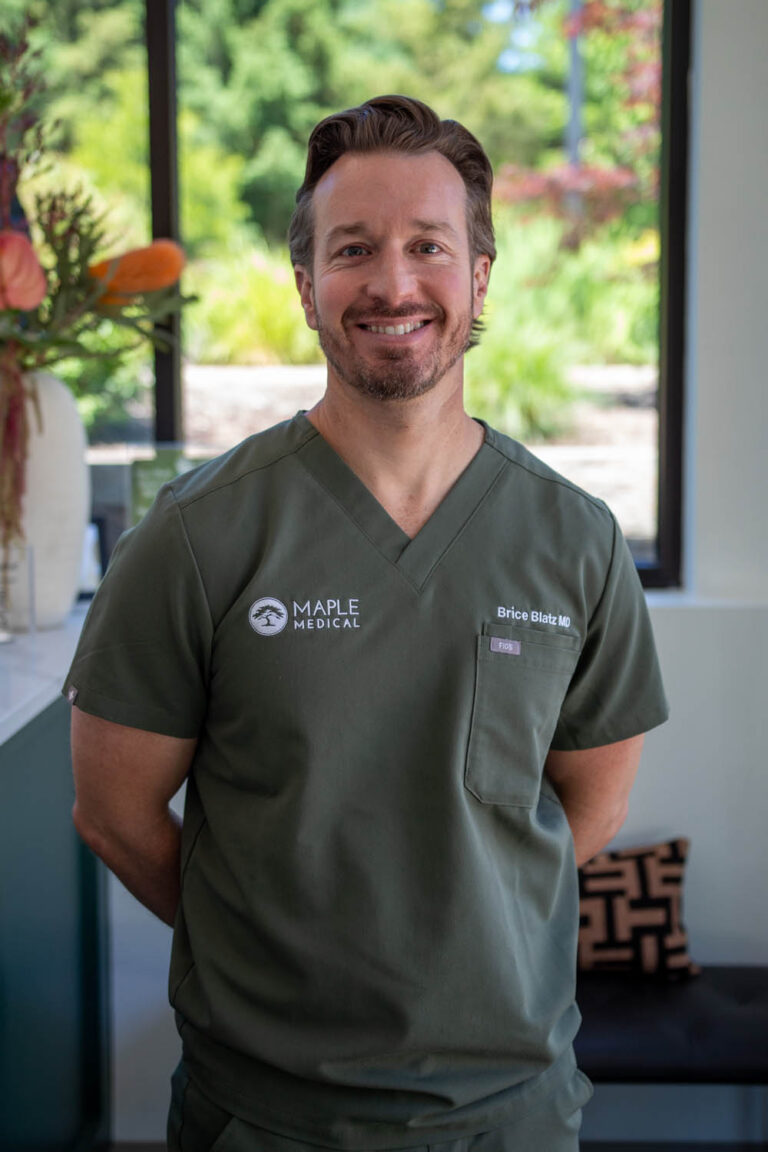
Dr. Blatz will explain how these options differ and why one approach may be more appropriate than another for your specific condition.
How Maple Medical Evaluates Tendon Injuries Before Tenex / TenJet
Your treatment plan begins with a detailed consultation and condition-focused evaluation.
Dr. Blatz will review your symptoms, previous care, medical history, imaging history, activity level, and goals. He may evaluate tenderness, strength, mobility, range of motion, movement patterns, and how your symptoms respond to certain activities.
When appropriate, ultrasound may be used to support evaluation, treatment planning, or procedure guidance. If you already have imaging, reports, records, or notes from previous treatment, those materials can help support a more complete conversation.
The goal is to determine whether your tendon pain may be appropriate for Tenex or TenJet, or whether a different treatment pathway makes more sense.
What to Expect With Tenex / TenJet Treatment
If Tenex or TenJet is recommended, the Maple Medical team will explain the process before treatment begins so you know what to expect.
Your care may include:
- Consultation and Candidacy Review: Dr. Blatz evaluates your tendon symptoms, prior care, imaging history, activity demands, and goals.
- Treatment Recommendation: If Tenex or TenJet may be appropriate, Dr. Blatz explains why the procedure is being considered and how it fits into your broader care plan.
- Preparation: The team reviews preparation instructions, expected costs, and next steps before treatment begins.
- Procedure: Tenex or TenJet is used to target unhealthy or damaged tendon tissue in the treatment area. The details of the procedure depend on your condition and recommended plan.
- Recovery Guidance: After treatment, your plan may include activity modification, follow-up visits, physical therapy coordination, gradual return-to-activity guidance, or at-home support when appropriate.
Recovery and Follow-Up After Tenex / TenJet
Recovery after Tenex or TenJet depends on the tendon treated, the severity of the condition, the procedure performed, and your activity goals.
Some patients may need to limit certain activities for a period of time. Others may need a structured return-to-activity plan with physical therapy coordination or specific movement guidance.
Tendon recovery often requires patience and follow-through. Even after a minimally invasive procedure, the tendon needs time to respond. Dr. Blatz and the Maple Medical team will help you understand what recovery may involve before treatment begins.
Tenex / TenJet in Lake Oswego and the Portland Area
Maple Medical is located in Lake Oswego and serves patients from Portland and nearby communities who are looking for a more personalized approach to chronic tendon pain and non-surgical musculoskeletal care.
Patients often come to Maple Medical because they want to understand why tendon pain keeps returning and whether a more targeted option such as Tenex, TenJet, PRP therapy, shockwave therapy, EMTT, or coordinated recovery planning may help them move forward with greater clarity.
Take the Next Step
If chronic tendon pain is limiting your movement, exercise, work, or quality of life, Maple Medical can help you explore whether Tenex, TenJet, or another non-surgical option may be appropriate.
Our Lake Oswego team will help you better understand what may be contributing to your tendon pain and what next steps may make sense for your goals.