What Is PRP Therapy?
PRP stands for platelet-rich plasma. Plasma is the liquid portion of your blood, and platelets are blood components involved in the body’s natural response to injury.
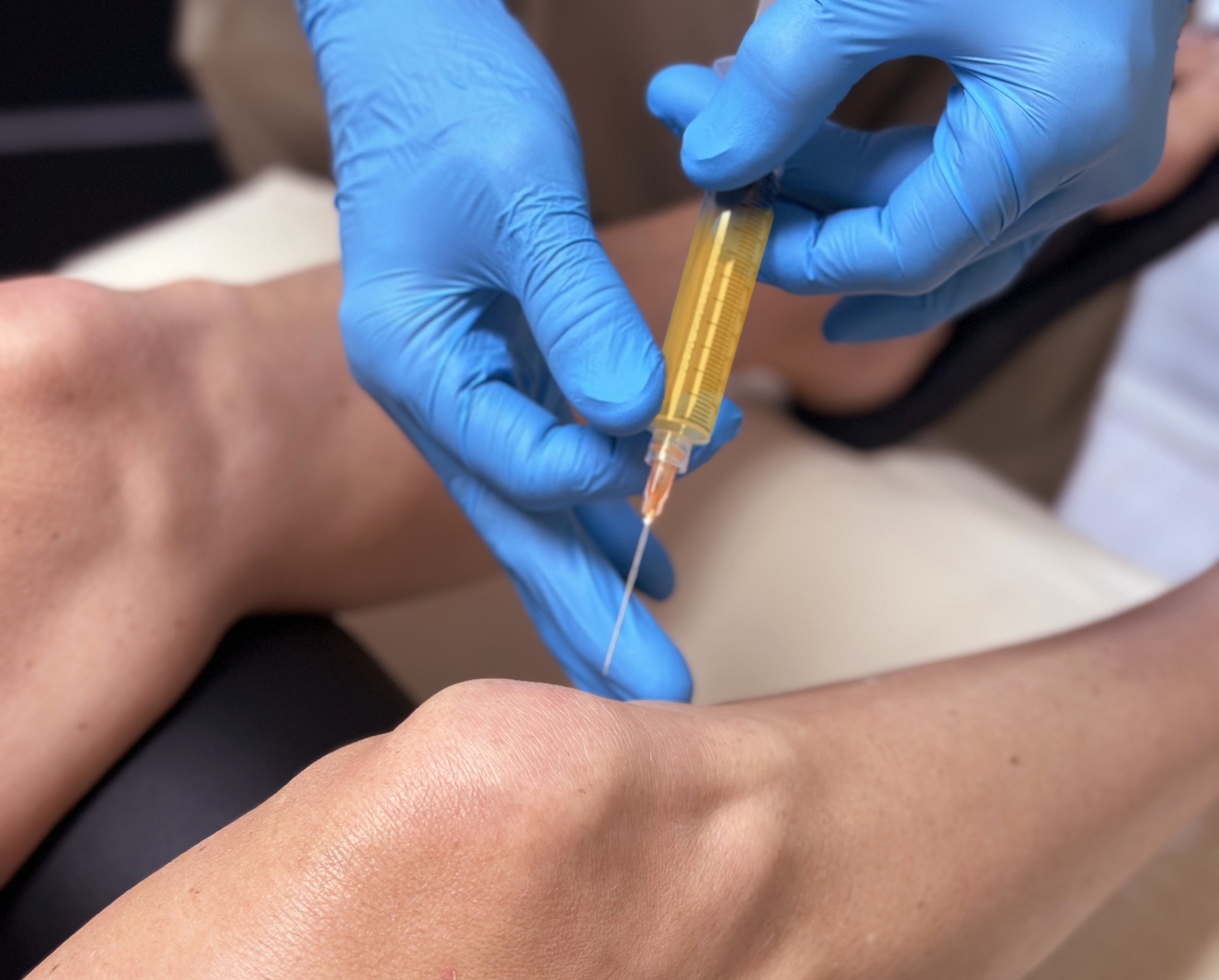
During PRP therapy, a small amount of your blood is drawn and processed to concentrate the platelet-rich portion. That prepared PRP is then placed into the targeted area as part of your treatment plan.
Patients often explore PRP because they want a regenerative option that uses material from their own body. PRP may be discussed for certain non-spine musculoskeletal concerns, but it is not right for every patient or every condition.
When PRP Therapy May Be Considered
PRP may be considered when Dr. Blatz determines that a targeted regenerative option may fit the patient’s condition and goals.
Depending on your evaluation, PRP therapy may be discussed for certain:
- Knee pain
- Shoulder pain
- Hip pain
- Tendon injuries
- Plantar fasciitis
- Osteoarthritis-related joint symptoms
- Ligament or soft tissue concerns
- Activity-related musculoskeletal injuries
- Pain that has not improved as expected with conservative care
The best use of PRP depends on the tissue involved, the severity of symptoms, how long the issue has been present, and what you want to get back to doing.
PRP for Tendon and Soft Tissue Concerns
PRP is often discussed for tendon and soft tissue concerns because these issues can become stubborn when tissue does not recover as expected.
Tendon pain may involve the elbow, shoulder, knee, hip, Achilles, foot, ankle, or another area. In some cases, PRP may be considered as part of a plan that also includes shockwave therapy, EMTT, Tenex, TenJet, physical therapy coordination, activity guidance, or follow-up care.
For chronic tendon problems, Dr. Blatz will consider whether PRP is appropriate on its own or whether another treatment option may be a better fit.
PRP for Joint Pain and Osteoarthritis
Some patients explore PRP therapy for joint pain or osteoarthritis-related symptoms. Osteoarthritis is a chronic joint condition, and PRP should not be described as a cure.
For appropriate patients, PRP may be considered as part of a non-surgical plan to support comfort, mobility, and function. The recommendation depends on the joint involved, symptom severity, imaging history, prior care, activity goals, and overall evaluation.
Dr. Blatz will help you understand what is realistic for your condition before treatment begins.
How PRP Therapy Works at Maple Medical
Your PRP process begins with a consultation, not the injection itself. Dr. Blatz first works to understand what may be contributing to your symptoms and whether PRP is a reasonable option.
The PRP process may include:
- Consultation and Evaluation: Dr. Blatz reviews your symptoms, previous care, medical history, imaging history, activity level, and goals. If you have imaging, reports, or notes from previous treatment, those materials can help support the conversation.
- Blood Draw: A small amount of your blood is drawn in the office.
- PRP Preparation: Your blood is processed to concentrate the platelet-rich portion used for treatment.
- Targeted Placement: The prepared PRP is placed into the treatment area. When appropriate, imaging guidance may be used to support accuracy and treatment planning.
- Recovery Guidance: Your team will explain what to expect after treatment, including activity guidance, follow-up recommendations, and any supportive care that may be part of your plan.
What PRP Therapy Is Not
PRP therapy is not a guaranteed cure, and it is not appropriate for every condition. It should not be treated as a shortcut back to full activity without a recovery plan.
For some patients, PRP may be a helpful part of care. For others, another treatment such as shockwave therapy, EMTT, Cell Therapy: MFAT & BMAC, Tenex, TenJet, physical therapy coordination, or a different recommendation may be more appropriate.
At Maple Medical, Dr. Blatz will explain why PRP may or may not fit your situation so you can make an informed decision.
Recovery and Follow-Up After PRP Therapy
Recovery after PRP therapy depends on the area treated, the condition, the treatment plan, and the patient’s activity demands. Some patients may need to modify activity for a period of time. Others may need physical therapy coordination, follow-up visits, at-home support, or gradual return-to-activity guidance.
The goal is not only to complete the treatment, but to support the tissue and movement patterns involved in your recovery.
Before treatment begins, Maple Medical will explain what to expect, what activities may need to be limited, and what follow-up may be recommended.
PRP Therapy in Lake Oswego and the Portland Area
Maple Medical is located in Lake Oswego and serves patients from Portland and nearby communities who are looking for a more personalized approach to regenerative medicine.
Patients often come to Maple Medical because they want to understand whether PRP may be appropriate for their pain, injury, or mobility concern before moving forward with treatment.
Take the Next Step
If joint pain, tendon pain, plantar fasciitis, osteoarthritis symptoms, or another non-spine musculoskeletal concern is limiting your movement or quality of life, Maple Medical can help you explore whether PRP therapy may be appropriate.
Our Lake Oswego team will help you better understand your condition, your treatment options, and what next steps may make sense for your goals.