Why Tendon Pain Keeps Coming Back
Tendons connect muscle to bone and help your body move, stabilize, lift, push, pull, run, jump, and absorb load. Because tendons are involved in repeated movement, they can become irritated when the amount of stress placed on the tissue is greater than what it can tolerate.
In the early stages, tendon pain may feel like a mild ache or tightness. Over time, it can become more persistent. Some patients notice pain that warms up during activity but returns later. Others feel morning stiffness, tenderness, weakness, or pain that limits normal movement.
When tendon pain becomes chronic, the issue may involve more than inflammation alone. The tendon may have changes in tissue quality, thickening, degeneration, poor load tolerance, or incomplete healing. That is why rest by itself does not always solve the problem.
Common Signs of a Tendon Injury
You may want to schedule a consultation if tendon pain is affecting:
- Walking, running, jumping, lifting, gripping, reaching, or climbing stairs
- Exercise, sports, work, or active hobbies
- Golf, tennis, pickleball, cycling, running, hiking, skiing, or strength training
- Strength or confidence using the affected area
- Comfort with repetitive tasks
- Pain that improves with rest but returns with activity
- Morning stiffness or tenderness near a joint
- Symptoms that have lasted for weeks or months
- Pain that has not improved as expected with physical therapy, injections, medication, rest, or activity modification
You do not need to know the exact tendon involved before scheduling. Many patients come to Maple Medical because they know the pain keeps returning, but they are not sure why.
Types of Tendon Problems We May Evaluate
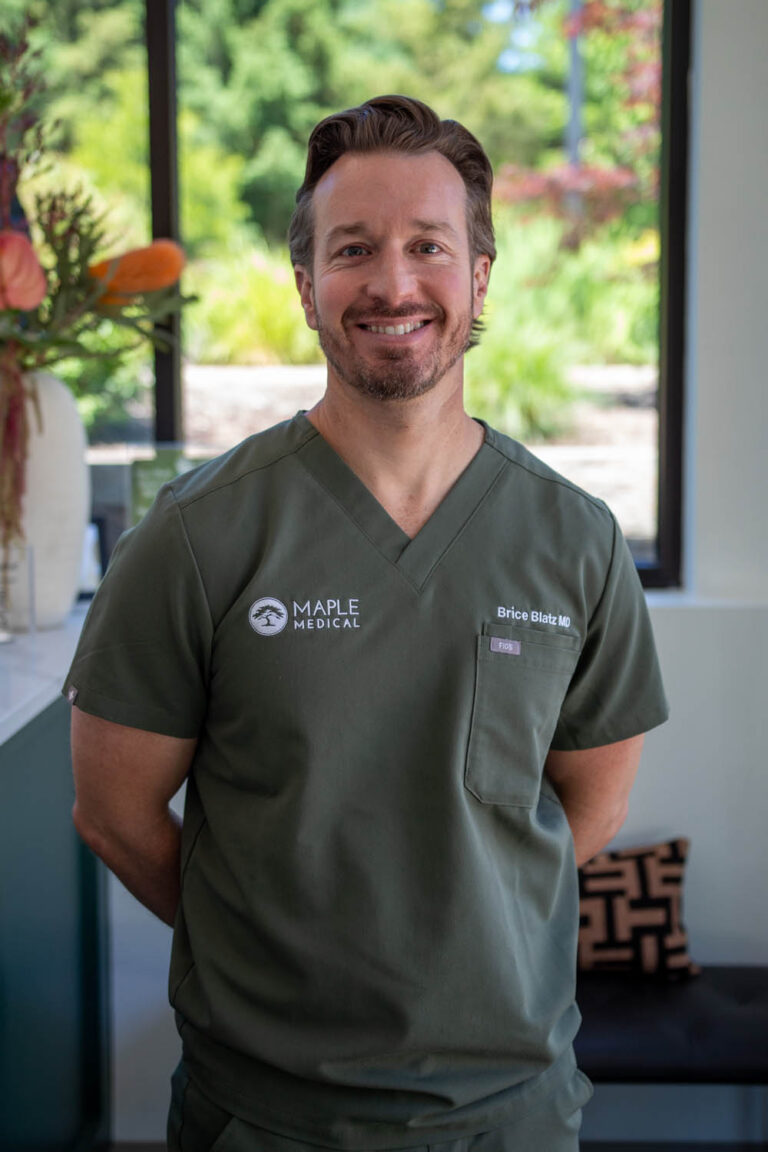
Tendon pain can affect many areas of the body. During your consultation, Dr. Blatz may discuss whether your symptoms could be related to:
- Achilles tendon pain
- Patellar tendon irritation
- Rotator cuff tendon pain
- Tennis elbow
- Golfer’s elbow
- Gluteal tendon pain
- Hamstring tendon concerns
- Biceps tendon irritation
- Hip, knee, shoulder, elbow, ankle, or foot tendon pain
- Overuse or repetitive strain
- Pain that returns when activity increases
- Symptoms that have not improved as expected with basic care
Tendon pain can also overlap with joint pain, bursitis, arthritis, nerve symptoms, muscle weakness, or movement limitations. A careful evaluation can help clarify what may be contributing to your symptoms and which next steps may make sense.
When Tendon Pain Becomes a Chronic Problem
A tendon injury can become chronic when the tissue does not fully recover or continues to be overloaded. This can happen after repetitive use, sudden changes in training, returning to activity too quickly, poor load tolerance, prior injury, or movement patterns that keep stressing the same area.
For active adults, chronic tendon pain can become especially disruptive. It may affect workouts, sports, work, travel, hobbies, or daily movement. Many patients also feel stuck because they have already tried rest or physical therapy, but the pain keeps returning.
At Maple Medical, tendon care is not just about quieting symptoms for a short period of time. The goal is to understand what is preventing recovery and whether a more targeted treatment plan may be appropriate.
Elbow, Achilles, Patellar, Rotator Cuff, and Gluteal Tendon Pain
Different tendon problems affect daily life in different ways.
- Elbow tendon pain, including tennis elbow or golfer’s elbow, can make gripping, lifting, typing, tool use, workouts, golf, tennis, or pickleball uncomfortable.
- Achilles tendon pain can interfere with walking, running, stairs, hills, or exercise.
- Patellar tendon pain may affect squatting, jumping, stairs, hiking, or workouts.
- Rotator cuff tendon pain can limit reaching, lifting, sleeping, exercise, or overhead activity.
- Gluteal tendon pain may cause discomfort along the outside of the hip, especially with walking, stairs, hills, or lying on one side.
Because each tendon has different demands, the right plan should be specific to the location, severity, activity goals, and tissue involved.
How Maple Medical Evaluates Tendon Injuries
At Maple Medical, tendon injury care begins with a detailed conversation and condition-focused evaluation.
Dr. Blatz will review your symptoms, activity level, previous injuries, prior treatments, imaging history, medical history, and goals. He may also evaluate tenderness, strength, mobility, range of motion, movement patterns, and how the tendon responds to certain positions or activities.
When appropriate, ultrasound may be used to support evaluation, treatment planning, or image-guided care. If you already have imaging, reports, records, or notes from previous treatment, those materials can help support a more complete conversation.
The goal is to determine whether your tendon pain may fit a regenerative medicine, energy-based therapy, minimally invasive tendon procedure, or coordinated recovery plan.
Treatment Options for Tendon Injuries
Your treatment plan depends on your consultation and evaluation. Maple Medical may recommend one therapy or a coordinated plan depending on your condition, goals, and clinical needs.
PRP Therapy
PRP therapy uses platelet-rich plasma from your own blood. It may be considered for certain tendon concerns when a targeted regenerative option is appropriate.
Shockwave Therapy
Shockwave therapy uses acoustic energy to stimulate tissue response in targeted areas. It may be considered for certain chronic tendon or soft tissue concerns, especially when symptoms have not improved as expected with basic care.
EMTT
EMTT, or electromagnetic transduction therapy, is a non-invasive energy-based treatment that may be used as part of a broader musculoskeletal recovery plan.
Tenex / TenJet
Tenex and TenJet are minimally invasive options for certain chronic tendon conditions. These procedures may be considered when unhealthy or damaged tendon tissue is contributing to ongoing pain and limited function.
Cell Therapy: MFAT & BMAC
Many patients searching for stem cell therapy are looking for biologic treatment options that use material from their own body. At Maple Medical, cell therapy may include MFAT, or microfragmented adipose tissue, and BMAC, or bone marrow aspirate concentrate, depending on the patient’s condition and evaluation.
For tendon concerns, cell therapy may be discussed only when appropriate as part of a broader treatment plan.
Ultrasound-Guided Procedures
When appropriate, ultrasound guidance may be used to help visualize the treatment area and guide certain injections or tendon procedures with greater precision.
Physical Therapy Coordination
Tendon recovery often depends on rebuilding strength, improving load tolerance, and returning to activity in a controlled way. Maple Medical may coordinate with physical therapists or work alongside your current provider when appropriate.
At-Home Support
Depending on your treatment plan, Dr. Blatz may recommend at-home red light therapy, activity guidance, follow-up care, or maintenance recommendations to support your overall recovery plan.
What Tendon Treatment Is Not Meant to Do
Tendon treatment is not meant to be a quick shortcut back to full activity without recovery planning. Even when a procedure or therapy is appropriate, tendons often need time and the right progression of activity to respond.
Regenerative medicine, shockwave therapy, EMTT, Tenex, TenJet, and other options should be matched to the right condition. Not every tendon problem needs the same treatment, and not every patient is a candidate for every option.
Dr. Blatz will help you understand what may be realistic for your condition and what role follow-up care, activity guidance, or physical therapy coordination may play.
What to Expect During Your Consultation
Your consultation is designed to help you better understand your tendon pain and the options that may fit your needs.
Dr. Blatz will discuss your symptoms, prior care, activity goals, medical history, and any imaging or records you provide. If regenerative medicine, shockwave therapy, Tenex, TenJet, or another non-surgical option may be appropriate, he will explain why that treatment may fit your condition and what the process may involve.
If another type of care is a better fit, he will guide you honestly.
Many regenerative medicine treatments are not covered by insurance. Our team will review expected costs before treatment begins.
Tendon Injury Care in Lake Oswego and the Portland Area
Maple Medical is located in Lake Oswego and serves patients from Portland and nearby communities who are looking for a more personalized, non-surgical approach to tendon pain.
Patients often come to Maple Medical because they want to understand why the pain keeps returning, what options may be available, and whether a more targeted care plan may help them move forward with greater clarity.
Take the Next Step
If tendon pain is limiting your movement, exercise, work, or quality of life, Maple Medical can help you explore your options with a personalized consultation.
Our Lake Oswego team will help you better understand what may be contributing to your tendon pain and whether regenerative medicine, shockwave therapy, Tenex, TenJet, or another non-surgical option may be appropriate for your needs.